- Français
- |
- Booklist
- |
- Week of Prayer
- |
- Links
- Areopagus - a forum for dialogue
- Academic journals
- Acronyms
- Bible tools
- Bibliographies
- Booksellers and publishers
- Churches
- Canadian church headquarters
- Directory of Saskatchewan churches
- Retreat centres
- Saskatchewan church and non-profit agencies
- Ecumenism.net Denominational links
- Anabaptist & Mennonite
- Anglican
- Baptist
- Evangelical
- Independent episcopal
- Lutheran
- Methodist, Wesleyan, and Holiness
- Miscellaneous
- Mormon
- Orthodox (Eastern & Oriental)
- Para-church ministries
- Pentecostal / charismatic
- Presbyterian & Reformed
- Quaker (Society of Friends)
- Roman & Eastern Catholic
- United and uniting
- Documents of Ecumenical Interest
- Ecumenical agencies
- Ecumenical Booklist
- Ecumenical Dialogues
- Glossary
- Human rights
- Inter-religious links
- Justice & peace
- Lectionaries
- Religious news services
- Resource pages
- Search Ecumenism.Net
- |
- Documents
- Ancient & Medieval texts
- Ecumenical Dialogues
- Interreligious
- Anabaptist & Mennonite
- Anglican
- Evangelical
- Lutheran
- Orthodox
- Reformed & Presbyterian
- Roman & Eastern Catholic
- United & Uniting
- Miscellaneous churches
- Canadian Council of Churches (CCC)
- Conference of European Churches (CEC)
- Interchurch Families International Network (IFIN)
- National Council of Churches in Australia (NCCA)
- Lausanne Committee for World Evangelism (LCWE)
- World Council of Churches (WCC)
- Other ecumenical documents
Church traditions
Documents from ecumenical agencies
- |
- Dialogues
- Adventist-Reformed
- African Instituted Churches-Reformed
- Anglican-Lutheran
- Anglican-Orthodox
- Anglican-Reformed
- Anglican-Roman Catholic
- Anglican-United/Uniting
- Baptist-Reformed
- Disciples of Christ-Reformed
- Disciples of Christ-Roman Catholic
- Evangelical-Roman Catholic
- Lutheran-Mennonite
- Lutheran-Mennonite-Roman Catholic
- Lutheran-Reformed
- Lutheran-Roman Catholic
- Mennonite-Reformed
- Mennonite-Roman Catholic
- Methodist-Reformed
- Methodist-Roman Catholic
- Oriental Orthodox-Reformed
- Orthodox-Reformed
- Orthodox-Roman Catholic
- Pentecostal-Reformed
- Prague Consultations
- REC-WARC Consultations
- Roman Catholic-Lutheran-Reformed
- Roman Catholic-Reformed
- Roman Catholic-United Church of Canada
- |
- Quick links
- Canadian Centre for Ecumenism
- Canadian Council of Churches
- Ecumenical Shared Ministries
- Ecumenism in Canada
- Interchurch Families International Network
- International Anglican-Roman Catholic Commission for Unity and Mission
- Kairos: Canadian Ecumenical Justice Initiatives
- North American Academy of Ecumenists
- Prairie Centre for Ecumenism
- Réseau œcuménique justice et paix
- Week of Prayer for Christian Unity
- Women's Interchurch Council of Canada
- World Council of Churches
- |
- Archives
- |
- About us

Liens catholiques
• Conférences des évêques
• Diocèses
• Documents
• Églises oriental
• Ordres, sociétés et institutes religieux
• Organismes
• Pastorale universitaire
• Ressources
• Conférences des évêques
• Diocèses
• Documents
• Églises oriental
• Ordres, sociétés et institutes religieux
• Organismes
• Pastorale universitaire
• Ressources
Catholic links
• Bishops' conferences
• Campus ministry
• Dioceses
• Documents
• Eastern churches
• Organizations
• Religious orders, societies & institutes
• Resource pages
• Bishops' conferences
• Campus ministry
• Dioceses
• Documents
• Eastern churches
• Organizations
• Religious orders, societies & institutes
• Resource pages
Liens ecclesiastiques
• Anabaptiste
• Anglicane
• Baptiste
• Catholique
• Églises diverses
• Églises unies
• Épiscopale et autonome
• Évangelique
• Lutherienne
• Méthodiste
• Ministères para-églises
• Mormonne
• Orthodoxe
• Pentecôtiste et charismatique
• Quaker (Société des Amis)
• Réformé et Calviniste
• Vielle Catholique
• Annuaire des églises canadiennes
• Annuaire des églises du Saskatchewan
• Anabaptiste
• Anglicane
• Baptiste
• Catholique
• Églises diverses
• Églises unies
• Épiscopale et autonome
• Évangelique
• Lutherienne
• Méthodiste
• Ministères para-églises
• Mormonne
• Orthodoxe
• Pentecôtiste et charismatique
• Quaker (Société des Amis)
• Réformé et Calviniste
• Vielle Catholique
• Annuaire des églises canadiennes
• Annuaire des églises du Saskatchewan
Denominational links
• Anabaptist
• Anglican
• Baptist
• Evangelical
• Independent episcopal
• Lutheran
• Methodist, Wesleyan, & Holiness
• Miscellaneous
• Mormon
• Old Catholic
• Orthodox
• Para-church ministries
• Pentecostal
• Presbyterian & Reformed
• Roman Catholic
• Quaker
• United & uniting
• Canadian Church Headquarters Directory
• Directory of Saskatchewan churches
• Anabaptist
• Anglican
• Baptist
• Evangelical
• Independent episcopal
• Lutheran
• Methodist, Wesleyan, & Holiness
• Miscellaneous
• Mormon
• Old Catholic
• Orthodox
• Para-church ministries
• Pentecostal
• Presbyterian & Reformed
• Roman Catholic
• Quaker
• United & uniting
• Canadian Church Headquarters Directory
• Directory of Saskatchewan churches
Search the website
Rechercher dans le site
- Vatican (Le Saint-SiègeThe Holy See)
"The term Holy See (Latin: Sancta Sedes, lit. "holy seat") refers in its original sense to the episcopal see of Rome, of which the Pope is the diocesan bishop (technically, the ordinary). Currently, Pope Francis is the ordinary of the Holy See. In the sense more widely used today, as defined in canon law, the Holy See refers to the Pope, the Roman Curia, and associated institutions, in effect, the government of the Roman Catholic Church.
The Holy See is also called the "Apostolic See", although this name properly refers to any see founded by the Apostles and especially to the three original patriarchal sees of Rome (St. Peter and Paul), Alexandria (St. Mark), and Antioch (St. Peter). Later Constantinople, allegedly founded by St. Andrew, and Jerusalem, restored after its period as a pagan city, were also numbered among the patriarchal sees. The five sees were ranked in descending order of precedence: Rome, Constantinople, Alexandria, Antioch, Jerusalem.
Aside from Rome, the archiepiscopal See of Mainz in Germany, which was also of electoral and primatial rank, is the only other see referred to as the "Holy See," although this usage is rather less common." (Wikipedia)
« Le Saint-Siège est l'incarnation du pouvoir spirituel de l'Église catholique romaine, c'est-à-dire du pape, et de son administration, la Curie romaine. L'État de la Cité du Vatican constitue son support temporel. » (Wikipedia)- Conseil Pontifical pour la Promotion de l'Unité des Chrétiens
« Le Conseil a une double fonction. Il est tout d'abord chargé de promouvoir, à l'intérieur de l'Église catholique, un authentique esprit œcuménique selon le Décret conciliaire Unitatis redintegratio; c'est à cette fin qu'un Directoire œcuménique a été publié en 1967-1970 et renouvelé en 1993 sous le titre: « Directoire pour l'application des principes et des normes sur l'œcuménisme». Le Conseil assume cette tâche en lien avec les divers dicastères de la Curie romaine, dont les compétences doivent également contribuer à l'effort de dialogue de l'Église catholique et être mises au service de ses relations avec toutes les Églises et Communautés ecclésiales.
En même temps, le Conseil pontifical s'efforce également de développer le dialogue et la collaboration avec les autres Églises et Communions mondiales. Aussi, dès sa création, il a établi une cordiale coopération avec le Conseil œcuménique des Églises (COE) dont le siège est à Genève; depuis 1968, douze théologiens catholiques sont membres à part entière de la Commission « Foi et Constitution », département théologique du COE. Il appartient également au CPPUC de nommer des observateurs catholiques aux différents rassemblements œcuméniques et d'inviter à son tour des observateurs ou des « délégués fraternels » des autres Églises et Communautés ecclésiales à l'occasion des grands événements de l'Église catholique. » (le site web) - Pontifical
Council for Promoting Christian Unity
"The Council exercises a double role. First of all, it is entrusted with the promotion, within the Catholic Church, of an authentic ecumenical spirit according to the conciliar decree Unitatis redintegratio; it was for this purpose that an Ecumenical Directory was published in 1967-1970 and a revised edition issued in 1993 entitled "Directory for the Application of Principles and Norms on Ecumenism". The Council carries out this task in liaison with the various departments of the Roman Curia, whose competence includes areas that can contribute similarly to the task of dialogue of the Catholic Church and should be put to the service of its relationships with all the Churches and ecclesial Communities.
At the same time, the Pontifical Council also aims to develop dialogue and collaboration with the other Churches and World Communions. Since its creation, it has also established a cordial cooperation with the World Council of Churches (WCC), whose headquarters are in Geneva. From 1968, twelve Catholic theologians have been members of the "Faith and Order" Commission, the theological department of the WCC. Similarly, it is the task of the PCPCU to name Catholic observers at various ecumenical gatherings and in its turn to invite observers or "fraternal delegates" of other Churches or ecclesial Communities to major events of the Catholic Church." (from the website)
- Conseil Pontifical pour la Promotion de l'Unité des Chrétiens
Conférences des évêques
Bishops' Conferences
- Australian Catholic Bishops' Conference
- Canadian Conference of Catholic Bishops (CCCB)
"The CCCB is the assembly of the Bishops of Canada founded in 1943 and officially recognized by the Holy See in 1948. Since the Second Vatican Council, it became part of a worldwide network of episcopal conferences established in 1965 as an integral part of the life of the universal Church.
The Conference provides ways for assisting the Bishops of Canada in their many pastoral responsibilities. The CCCB supports the bishops in their work by providing resource persons and specialists in different areas such as ecumenism, theology, liturgy, social affairs, evangelization, Christian education and communications. The CCCB involves itself in matters of national and international scope and provides the bishops a forum where they can share their experience and insight on the life of the Church and the major events that shape our society.
The CCCB is made up of 137 bishops from 71 dioceses, including seven from the Eastern Churches and a military ordinariate."
- Catholic Bishops' Conference of England and Wales
- Catholic Bishops Conference of Germany
- Catholic Bishops Conference of India
- Catholic Bishops' Conference of Ireland
- Catholic Bishops' Conference of Papua New Guinea and Solomon Islands
- Catholic Bishops' Conference of Scotland
- Catholic Bishops' Conference of Sri Lanka
- Conférence des évêques catholiques du Canada (CECC)
«Fondée en 1943 et reconnue officiellement par le Saint-Siège en 1948, la CECC est l'assemblée de tous les évêques catholiques du pays. Elle constitue un organisme de services dont s'est doté l'épiscopat canadien pour l'aider dans ses diverses tâches pastorales. La CECC soutient les évêques canadiens dans leur travail en mettant à leur disposition des personnes-ressources et des spécialistes dans divers champs d'expertise tels que l'œcuménisme, la théologie, la liturgie, les affaires sociales, l'éducation chrétienne et les communications. La CECC s'occupe de dossiers et d'activités à caractère national et international tout en offrant aux évêques un lieu où ils peuvent échanger sur leur ministère, sur la vie de l'Église et sur les grandes questions de l'heure.
La CECC est composée de 137 évêques représentant 71 diocèses, dont sept de rite oriental, et un ordinariat militaire.» - Conférence des Evêques de France (CEF)
- Council of European Bishops' Conferences (CCEE)
- Consejo Episcopal Latinamericano (CELAM: Latin American Bishops' Council)
- La Iglesia Católica en Cuba
- United States Conference of Catholic Bishops (USCCB)
formerly known as the National Conference of Catholic Bishops (NCCB)- P.J. Kenedy Official Catholic Directory (of the U.S.)
This is the online edition of the essential publication for finding Catholic parishes and agencies in the United States.
- P.J. Kenedy Official Catholic Directory (of the U.S.)
- New Zealand Catholic Bishops' Conference
- Southern African Catholic Bishops' Conference

Eastern Catholic churches
Églises catholiques oriental
- Ukrainian Greek Catholic Church (official site)
"The Ukrainian Greek Catholic Church (UGCC) is the largest of the Eastern Catholic Churches sui juris. The UGCC is a Church of the Byzantine rite which is in full ecclesial communion with the Pope of Rome and acknowledges his spiritual and jurisdictional authority. In this context "rite" means liturgical, theological, spiritual and canonical tradition. Other names for this church: Uniate Church; Greek Catholic Church; Greco-Catholic Church; Ukrainian Catholic Church; Ukrainian Catholic Church of the Byzantine rite; Kyivan Catholic Church. The name Greek Catholic Church was introduced by the Empress Maria-Teresa in 1774 to distinguish this Church from the Roman Catholic and Armenian Catholic Churches. In official church documents the term Ecclesia Ruthena unita was used. In 1960 the name Ukrainian Catholic Church started to be used in official documents to refer to Ukrainian Catholics in the diaspora and the underground Church in Soviet Ukraine. In the papal statistical annual Annuario Pontificio the name Ukrainian Catholic Church of the Byzantine rite is used. At the Synod of Bishops of the UGCC (September 1999) the name Kyivan Catholic Church was proposed, to emphasize the identity of this Church." (from the website)
Archidiocèses, diocèses, et éparchies du Canada
Archdioceses, Dioceses, and Eparchies in Canada
Dioceses & Eparchies
• West (18)
• Ontario (14)
• Quebec (20)
• Atlantic (12)
• Eastern Rites
• Military Ordinariate
Diocèses et éparchies
• Ouest (18)
• Ontario (14)
• Québec (20)
• Atlantique (12)
• Rites Oriental
• Ordinariat militaire
Catholics: 12,494,903; Priests: 8,801; Religious: 23,684
Dioceses: 63 latin-rite; 7 Eastern Churches; 1 Military Ordinariate
Catholiques: 12,494,903; Prêtres: 8,801; Religieux-ses: 23,684
Diocèses: 63 de rite latin; 7 de rite oriental; 1 ordinariat militaire
- Diocese of Calgary, Alberta
- Diocese of Churchill-Hudson Bay, Manitoba & Nunavut
- Archdiocese of Edmonton, Alberta
- Diocese of Gravelbourg, Saskatchewan
This diocese ceased to exist as of September 14, 1998. The Diocese of Gravelbourg, established as a French-language diocese in 1930, will be included in the Archdiocese of Regina except for a small area in the northwestern section, known as Fox Valley, which will become part of the Diocese of Saskatoon.
Le diocèse a cessé d'exister le 14 septembre 1998. Le diocèse de Gravelbourg, établi comme diocèse francophone en 1930, a vu la plus grande majorité de ses paroisses transférer à l'archidiocèse de Régina, à l'exception d'un territoire situé au nord-ouest, qui a plutôt été cédé au diocèse de Saskatoon. - Archdiocese of Grouard-McLennan, Alberta
- Diocese of Kamloops, British Columbia
- Archdiocese of Keewatin-Le Pas, Manitoba & Saskatchewan
- Diocese of Mackenzie-Fort Smith, North West Territories
- Abbacy of Muenster, Saskatchewan
This diocese ceased to exist as of September 14, 1998. The Territorial Abbacy of St. Peter-Muenster, erected as an Abbey Nullius in 1921, was amalgamated with the Diocese of Saskatoon in 1998.
L'Abbaye territoriale a cessé d'exister le 14 septembre 1998. L'Abbaye territoriale Saint-Pierre de Muenster, érigée comme Abbaye Nullius en 1921, a été fusionnée entièrement au diocèse de Saskatoon. - Diocese of Nelson, British Columbia
- Diocese of Prince Albert, Saskatchewan
"The Diocese of Prince Albert (est. 1891) is the oldest of three Roman Catholic dioceses in Saskatchewan. Located in the north-central part of the province, it stretches east-west from the Manitoba to the Alberta borders and north-south from Prince Albert National Park to the Wakaw area. It includes 83 rural and urban parishes including 17 on First Nations reserves, with a total Catholic population of approximately 45,000 in more than 10,000 households. Bishop Blaise Morand became the diocese's sixth bishop in 1983." [from the website] - Diocese of Prince George, British Columbia
- Archdiocese of Regina, Saskatchewan
The diocese of Regina was first erected as suffragan See to the Archdiocese of St. Boniface on March 4, 1910. Since that time, six Archbishops have served the Archdiocese of Regina in southern Saskatchewan. In 1998, the Archdiocese amalgamated with the former Diocese of Gravelbourg. The Diocese of Gravelbourg, established as a French-language diocese in 1930, was included in the Archdiocese of Regina except for a small area in the northwestern section, known as Fox Valley, which has become part of the Diocese of Saskatoon. - Archdiocese of Saint-Boniface, Manitoba
- Diocese of Saint-Paul, Alberta
- Diocese of Saskatoon, Saskatchewan
"The Roman Catholic Diocese of Saskatoon is a dynamic and vibrant diocese located in Saskatchewan, the heartland of Canada's prairie provinces. The newly amalgamated Diocese of Saskatoon came into existence on Sept. 14, 1998 as the result of a papal order that re-defined the territories for Saskatchewan's dioceses. The order came on the recommendation of Saskatchewan's bishops and was then approved by the Canadian Conference of Catholic Bishops. The last time Saskatchewan dioceses were redefined prior to this order was in 1933 when Saskatoon was created and prior to that, Gravelbourg in 1930. The papal order reduced the number of dioceses in Saskatchewan from five to three: Prince Albert, Saskatoon and Regina. The former diocese of Gravelbourg was largely included in the Diocese of Regina. The Diocese of Saskatoon inherited the west part of Gravelbourg, the area formerly covered by the territorial Abbacy of Muenster, as well as part of the former Diocese of Regina. In essence, that means the Saskatoon diocese has a western border south of the river to Fox Valley and Prelate, SK and stretch east as far as Foam Lake and Lintlaw. The addition of the new areas has added some 20,000 people to the Diocese which now includes some 112 parishes and a Catholic population of 93,859. To handle communication with people from such a vast area, seven regional deaneries have been developed within the diocese. These are designed to keep parishes in touch with one another, foster collaboration, resource sharing and problem solving among parishes in a region, and provide a forum to address regional concerns. Representatives from each of the deaneries also serve on the Diocesan Pastoral Council, which is set up as an advisory body which can help facilitate a two-way communication between the parishes and the bishop. The Diocese of Saskatoon includes approximately 87 rural municipalities as well as the city of Saskatoon. In total, this includes some 44,800 square kilometres with a total population of approximately 318,000. The Catholic population of this area was 93,859 as of Dec. 31, 1998." [from the website] - Archdiocese of Vancouver, British Columbia
- Diocese of Victoria, British Columbia
- Diocese of Whitehorse, Yukon
- Archdiocese of Winnipeg, Manitoba

Ontario
- Alexandria-Cornwall
- Hamilton
- Hearst
- Kingston
- London
- Moosonee
- Ottawa
- Pembroke
- Peterborough
- Sault Ste. Marie
- St. Catharines
- Thunder Bay
- Timmins
- Archdiocese of Toronto, Ontario
Québec
- Amos
- Baie-Comeau
- Chicoutimi
- Gaspé
- Gatineau-Hull
- Joliette
- Mont-Laurier
- Montréal
- Moosonee
- Nicolet
- Québec
- Rimouski
- Rouyn-Noranda
- Saint-Anne-de-la-Pocatière
- Saint-Hyacinthe
- Saint-Jean-Longueuil
- Saint-Jérôme
- Sherbrooke
- Trois-Rivières
- Valleyfield
Atlantic
Atlantique
- Diocese of Antigonish, Nova Scotia
- Dicoese of Bathurst, New Brunswick
- Diocese of Charlottetown, Prince Edward Island
- Diocese of Edmundston, New Brunswick
- Diocese of Grand Falls, Newfoundland
- Archdiocese of Halifax, Nova Scotia
- Diocese of Labrador City-Schefferville
- Archdiocese of Moncton, New Brunswick
- Diocese of Saint John, New Brunswick
- Diocese of St. George's, Newfoundland
- Archdiocese of St. John's, Newfoundland
- Diocese of Yarmouth, Nova Scotia
Rites oriental du Canada
Eastern rites in Canada
- Ukrainian
- Archeparchy of Winnipeg (Manitoba)
- Eparchy of Edmonton (Alberta)
- Eparchy of New Westminster (British Columbia)
- Eparchy of Saskatoon (Saskatchewan)
- Eparchy of Toronto and Eastern Canada (Ontario, Quebec, & Atlantic Canada)
- Apostolic Exarch for Armenian Catholics in Canada and the United States
Most Rev. Manuel Batakian - Catholic Eparchy of Canada - United States (Syriac)
- Bishop for Hungarian Emigrants (Worldwide)
Most Rev. Attila Mikloshazy, S.J. - Eparchy of Montreal (Greek-Melkite)
- Eparchy of Montreal (Maronite)
St. Maroun Eparchy - St. Thomas Syro-Malabar Catholic Diocese of Chicago
Syro-Malabarian eparchy of Canada and the United States - Eparchy of Toronto (Slovaks)
Military Ordinariate
"The Military Ordinariate was created April 21, 1986 following
the publication of Apostolic Constitution Spirituali Militum Curae. ... All
Catholic military personnel, including those of the Eastern Rites, and civilian personnel
of National Defence come under the jurisdiction of the Military Ordinariate. This also
includes their families. Residents of schools under the jurisdiction of Canadian Forces as
well as residents of Veteran hospitals are also included." [from the website]
Ordinariat militaire
«Ce n'est que depuis le 21 avril 1986, après la publication de la
Constitution apostolique Spirituali militum curae, que les militaires canadiens
catholiques et leurs ayants droit sont placés sous la juridiction d'un Ordinaire
militaire et de ses aumôniers. La juridiction de l'Ordinaire militaire s'étend à tous
les fidèles militaires, y compris les militaires catholiques de rite oriental, ainsi que
le personnel civil soumis à la loi de la Défense nationale. À ceux-ci s'ajoutent encore
les membres de leurs familles, à savoir les conjoints et les enfants. Il faut aussi
compter les résidents des écoles et des hôpitaux vétérans, tout comme les militaires
étrangers affectés auprès des Forces canadiennes sans être accompagnés de leur propre
aumônier catholique.»
Organismes catholiques
Catholic organizations
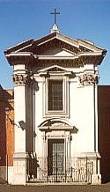
- 105 Live - Vatican Radio
"Broadcast in Rome on 105 FM (hence the name) and worldwide via satellite and the internet, One-O-Five Live takes up the communications challenge of the 21st century with a dynamic, interactive, multi-linguistic format." [from the website] Many of the programmes are available in streaming audio. A daily email service announces the online programmes. - Association of Catholic Colleges and Universities (ACCU)
- Association of US Catholic Priests
AUSCP is a forum where priests across the United States can relate to one another; foster dialogue with clergy, bishops, religious, laity, and with their organizations. We continue to celebrate and implement the visionary concepts of the Second Vatican Council; to be servant leaders in a servant Church; to minister with humility, mercy, and faithfulness; to revitalize the Body of Christ through contemplation and witness to the goodness among our fellow pilgrims; to be a voice of hope; and to preach and act prophetically. - Canadian Catholic Organization for Development and Peace (CCODP)
- Canadian Catholic Colleges & Universities (CCCU)
- Catholic Biblical Association of Canada
"CBAC has a special mission and privilege: to foster the knowledge of and reverence for the Bible. In our faith journey we encounter God and God's saving message in a variety of times and places, but most particularly in the prayer, pain, joy and quest which have found expressions in our Bible." - Catholic Charities USA
- Catholic Press Association (CPA)
- Catholic Relief Services
- Catholic Women's League of Canada (CWL)
- Christian Life Community (CLC)
CLC's are small groups of lay Christians, who gather for prayer, reflection, and service to the world. They are formed with an Ignatian spirituality, and have a close connection to the Jesuit community. - International Federation of Catholic Universities
- Independent Catholic News
- National Association Of Lay Ministries
- National Catholic Educational Association (NCEA)
- National Catholic Student Coalition
"Empowered by the Spirit, the National Catholic Student Coalition strives to embody the Catholic identity for students from campus ministries at institutions of higher education in the United States of America." - National Evangelization Teams (NET)
- Prairie Centre for Ecumenism
- Radio Vaticana
- Radio Vatican (service français)
- Sant' Egidio Community
The Sant' Egidio Community is a lay community formed in Rome in the late 1960's in response to the Second Vatican Council. The community is involved in numerous social action projects, including their current campaign for a moratorium on the death penalty. They are credited with helping to end the civil war in Mozambique through their mediation. Although this community began as a young adult ministry in the diocese of Rome, they no longer are restricted to young adults or Italians. Sant' Egidio is the Italian name for St. Giles. The community assumed this name because they originated in the parish church of Sant' Egidio in Rome's Trastevere district. - St. John Bosco Camp (Saskatchewan, Canada)
- Ukrainian Catholic University (UCU)
- Vatican Radio (English service)
"Every day Vatican Radio, through its programmes in 40 different languages and two hundred journalists from 61 different countries, broadcasts in five continents. Vatican Radio... More than 22,000 hours of simultaneous broadcasting on different frequencies including news, live reports religious celebrations, in-depth programmes and music. Vatican Radio... From topical subjects to in-depth programmes on moral questions, Vatican Radio, offers to everyone, catholic or not, the Church point of view." [from the website]

Ressources catholiques
Catholic resource pages
See also the more extensive list found in our page: "Resource Pages." Many of the links below are repeated there, while there are also provided many additional links to pages that are not exclusively Catholic in content.
NOTE: Many of these sites have no official sanction, and represent a particular perspective on the Catholic community, doctrines, and life of faith. Exploring these sites without seeking alternative perspectives will present you with a seriously distorted vision of the contemporary Catholic church.
- ACI-Prensa El portal Católico (Español)
- Adoremus
- AlaPadre's Catholic Index
- America magazine
- American Catholic Online
- American University Documents Archive
- Association of Catholic Colleges and Universities
- Aquinas Academy
- Bangladesh Christian Online
- BEC (Español)
- Biblical Evidence...
- Bollandists - Christian hagiography
- Byzantine Catholic
- Catholic Answers
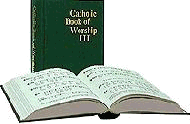
- Catholic Book of Worship MIDI files
"The Catholic Book of Worship III (CBW III) is Canada's official Catholic hymnal, containing about 400 hymns, plus additional service music. Since many of the hymn tunes are available here in MIDI, parish musicians and choir members can use this site to listen to the tunes and consider the possibilities available." [from the website provided by the Diocese of St. George's, Newfoundland] - Catholic Canada
- CatholicConnect!
- Catholic Counterpoint
- Catholic Courier Online
- Catholic Digest
- Catholic Directory - Online Catholic Directory
Catholic directory of groups, parishes, events, resources and people. Plus an Online Community where you can meet other people. - Catholic Engaged Encounter
- Catholic Information Center
- Catholic Information Network (CIN)
- Catholic Internet Directory
- Catholic Internet Sites
- CatholicJukebox.com
- Catholic News Service (CNS)
- Catholic Online
- Catholic Nexus
- Catholic-pages.com
- Catholic Radio and Television Network
- Catholic Resources on the Net
- Catholic Schools on the Net
- Catholic-USA.com
- Catholic Young Adults
- CatholiCity
- C@thoLink - Les catholiques suisses en ligne
Catholic church in Switzerland, French language site - CatholicNet Online
- Catholics United for the Faith
- Centro Pro Unione
An ecumenical centre in Rome sponsored by the Franciscan Friars of the Atonement. Their website is an excellent source of ecumenical documents, and research on ecumenical dialogues. - La Chiesa Cattolica in Svizzera
Catholic church in Switzerland, Italian language site - Chris Miller's Catholic Page
- Church in Australia: The Catholic Tradition
- e3mil
- Ecclesia - A Web Service for Catholics
- Ecumenical Centre for Evangelism
- Envoy Magazine
- Et Cum Spiritu Tuo
- Eternal Word Television Network (EWTN)
- Fatima Network
- Gregorian Chant Home Page
- Intercom
- Internet Padre
- Kath.ch - Portal Katholische Kirche Schweiz
- Kath.de: Catholic Churches in Germany
- Kath Web (Austria)
- Katholisch-Theologische Fakultdten
- Liturgical Library
- Nazareth Resources
- New Advent
- Bookshop
- Catholic FAQ
- Church Documents
- Councils
- Popes
Complete list with link to text in Catholic Encyclopedia (1917 edition) - Sacraments
- Official Catholic Directory (of the U.S.A.)
Also known as the "Kenedy Directory," [sic] after the publisher, this directory is the essential publication for finding Catholic parishes and agencies in the United States. It is not available online. - PetersNet
- Praise of Glory: Catholic Page for Lovers
- Resources for Catholic Educators
- Saint Jean-le-Précurseur
- San Francisco Bay Catholic WWW Site
- Single Catholics Online
- Spokane Catholic Radio
- St. Joseph, Mendham, New Jersey
- St. Max Media
- Thomas Merton Society of Great Britain and Ireland
provides links to other Merton sites - The University Concourse
An independent journal of opinion. Closely related to but not affiliated with the Fransiscan University of Steubenville. - Ultimate Pro-Life List
- WTS Roman Catholic Resources in Canada

Ordres, sociétés et institutes religieux
Religious Orders, Societies and Institutes
Sites intéressants
Websites of special interest
- AIM-USA
Alliance for International Monasticism - Alliance InterMonastères
- Canadian Religious Conference
an association of Roman Catholic religious orders - Monastic Interreligious Dialog
A dialogue between Christian monastic communities and similar monastic movements in various religions. - Religious Orders: A Guide to Online Resources
(Kimberly Georgedes, editor) by ORB Online Encyclopedia
Les ordres
Orders
- Augustinians
- Basilians (Order of St. Basil, C.S.B.)
- Benedictines (Order of Saint Benedict, O.S.B.)
- Abbot Primate
- Anglican Benedictines
- Benedictine Musicians of the Americas
- Benedictine Retreat Houses
- Confederation of Benedictine Congregations
Erected by Pope Leo XIII in 1887, First Abbot Primate installed, 12.vii.1893 - Friends of St. Benedict
- Monasteries
- House of Bread Monastery, Nanaimo, British Columbia
- Monasteri Benedettini di Subiaco, Rome, Italy
- St. Benedict's, Winnipeg, Manitoba
- St-Benoit-du-Lac, St-Benoit-du-Lac, Québec
- St. John's Abbey, Collegeville, Minnesota
- St. Mary's Abbey, Morristown, New Jersey
- St. Peter's Abbey, Muenster, Saskatchewan
- Oblates of Saint Benedict
- Pontifical Athenaeum of St. Anselm
"The College of St. Anselm (Sant'Anselmo) was founded in 1887 by Pope Leo XIII as an international school of theology for Benedictines. The Pontifical Athenaeum of St. Anselm, as the school became known already in 1934, has become, in the wake of the reforms in theological education following the II Vatican Council, an integral part of the Roman system of theology schools, offering both undergraduate programs in philosophy and theology as well as specializations in Philosophy and Mysticism, Monastic Studies, Sacramental Theology, History of Theology, and Liturgy. As a part of this Roman system, considered both as a school (the Athenaeum) and as a residence (the College), Sant'Anselmo draws students from all Benedictine Congregations and from countries all over the world. Both as school of theology and as residence the primary goal of Sant'Anselmo is to provide quality theological education both to the Benedictine Confederation, other monastic congregations, and to the Church universal." [from the website]
- Carmelites
- Carthusians
- Cistercians and Trappists
- Cistercians of the Common Observance
- Notre-Dame de l'Assomption, Rogersville, New Brunswick
- Cistercians of the Strict Observance (O.C.S.O.)
- Abbey of the Genesee, Piffard, New York
- Abbey of Gethsemani, Trappist, Kentucky
- New Melleray Abbey, Iowa
- Cistercians of the Common Observance
- Claretian Missionaries
- Congregation of Notre Dame
- The Daughters of St. Paul
- Discalced Carmelites
- Dominicans (Order of Preachers, O.P.)
- Franciscans International (Order of Friars Minor, O.F.M.)
- Society of Jesus (a.k.a. The Jesuits)
- Society of Jesus (Upper Canada Province)
- Jesuit Vocation Office
- Canadian Jesuits International
This is the mission office of the Jesuits of Upper Canada.
- Society of Jesus (Irish Province)
- Society of Jesus (Oregon Province)
- see also Christian Life Communities (CLC)
CLC's are small communities of lay and ordained who gather for prayer, community and mission. Many follow an Ignatian spirituality and are closely associated with local Jesuit communities. - Jesuit Resources on Gopher - useful educational lists
- Society of Jesus (Upper Canada Province)
- Missionaries of the Precious Blood (C.PP.S.)
- Oblates of Mary Immaculate (O.M.I.)
- Assumption Province (Ontario)
- Granadin Province (Alberta)
- Manitoba Province
- Quebec
- Pallottines (Society of the Catholic Apostolate, s.a.c.)
- Paulist Fathers (The Missionary Society of St. Paul the Apostle, C.S.P.)
- Poor Clare Sisters of Spokane, Washington
- Redemptorists (Congregation of the Most Holy Redeemer, C.Ss.R.)
- Salesians
- Scarboro Foreign Mission Society
- Sisters of Charity (Halifax) (s.c.)
- Sisters of Charity of the Immaculate Conception (S.C.I.C.)
- Sisters of Providence of St. Vincent de Paul
- Society of the Sacred Heart
- The Spiritans
Pastorale universitaire
Catholic campus ministry
Organismes nationaux et internationaux
National/international organisations
- Canadian Catholic Campus Ministry/Pastorale universitaire catholique du Canada
"The Canadian Catholic Campus Ministry (CCCM) is a national network of professional Catholic Campus Ministers, grounded in the tradition of the Roman Catholic Church and inspired by the vision of Vatican II. CCCM foster the professional, theological and spiritual growth of Campus Minsters and promotes the mission of the church in higher education." - Canadian Catholic Students' Association
"The Canadian Catholic Students' Association(CCSA) is a national framework of support and communication, which unifies local Catholic student communities and represents them on national and international levels: Catholic, ecumenical and interfaith." - Catholic Campus Ministry Association (USA)
- CCO: Catholic Christian Outreach (Canada)
"Catholic Christian Outreach (CCO) is a university student movement dedicated to evangelization. We challenge students to live in the fullness of the Catholic faith, with a strong emphasis on becoming leaders in the renewal of the world. CCO was founded at the University of Saskatchewan in Saskatoon, Saskatchewan, Canada in 1988 after receiving the approval of the local bishop. From a humble beginning of four students, the ministry now serves hundreds of students on several campuses through a wide array of programs and outreaches." National office, Saskatoon, Saskatchewan. Regional offices in Regina, Ottawa and Vancouver. - Catholic University of America Campus Ministry
- Newman Centers/Catholic Student Organizatons
Aumôneries
Chaplaincies
- Assumption University Campus Ministry, federated with the University of Windsor, Ontario
- Brescia College, University of Western Ontario, London, Ontario
- Campion College at the University of Regina, Saskatchewan
- The Catholic University of America Campus Ministry, Washington, D.C.
- The Chinese Catholic Society of the University of British Columbia, Vanvouver, British Columbia
- College universitaire de Saint-Boniface, Saint-Boniface (Winnipeg), Manitoba
- King's College, Unoversity of Western Ontario, London, Ontario
- Laurentian University, Sudbury, Ontario
- Newman Theological College, St. Albert, Alberta (NW suburb of Edmonton)
- St. Francis Xavier University, Antigonish, Nova Scotia
- St. Jerome's University at the University of Waterloo
- St. Joseph's College, University of Alberta (Edmonton)
- Saint Paul University/Université Saint Paul, Ottawa, Ontario
- St. Paul's College, The University of Manitoba (Winnipeg)
- St. Peter's College, Muenster, Saskatchewan. Affiliated with the University of Saskatchewan.
- St. Thomas More College, federated with the University of Saskatchewan.
- Simon Fraser University Catholic Chaplaincy, Burnaby, British Columbia (Greater Vancouver)
- University of Calgary Catholic Community, Calgary, Alberta
- University of Ottawa Spiritual Resources, Ottawa, Ontario
- University of St. Michael's College, federated with the University of Toronto
- University of Victoria Interfaith Chaplaincy Services, Victoria, British Columbia