- Français
- |
- Booklist
- |
- Week of Prayer
- |
- Links
- Areopagus - a forum for dialogue
- Academic journals
- Acronyms
- Bible tools
- Bibliographies
- Booksellers and publishers
- Churches
- Canadian church headquarters
- Directory of Saskatchewan churches
- Retreat centres
- Saskatchewan church and non-profit agencies
- Ecumenism.net Denominational links
- Anabaptist & Mennonite
- Anglican
- Baptist
- Evangelical
- Independent episcopal
- Lutheran
- Methodist, Wesleyan, and Holiness
- Miscellaneous
- Mormon
- Orthodox (Eastern & Oriental)
- Para-church ministries
- Pentecostal / charismatic
- Presbyterian & Reformed
- Quaker (Society of Friends)
- Roman & Eastern Catholic
- United and uniting
- Documents of Ecumenical Interest
- Ecumenical agencies
- Ecumenical Booklist
- Ecumenical Dialogues
- Glossary
- Human rights
- Inter-religious links
- Justice & peace
- Lectionaries
- Religious news services
- Resource pages
- Search Ecumenism.Net
- |
- Documents
- Ancient & Medieval texts
- Ecumenical Dialogues
- Interreligious
- Anabaptist & Mennonite
- Anglican
- Evangelical
- Lutheran
- Orthodox
- Reformed & Presbyterian
- Roman & Eastern Catholic
- United & Uniting
- Miscellaneous churches
- Canadian Council of Churches (CCC)
- Conference of European Churches (CEC)
- Interchurch Families International Network (IFIN)
- National Council of Churches in Australia (NCCA)
- Lausanne Committee for World Evangelism (LCWE)
- World Council of Churches (WCC)
- Other ecumenical documents
Church traditions
Documents from ecumenical agencies
- |
- Dialogues
- Adventist-Reformed
- African Instituted Churches-Reformed
- Anglican-Lutheran
- Anglican-Orthodox
- Anglican-Reformed
- Anglican-Roman Catholic
- Anglican-United/Uniting
- Baptist-Reformed
- Disciples of Christ-Reformed
- Disciples of Christ-Roman Catholic
- Evangelical-Roman Catholic
- Lutheran-Mennonite
- Lutheran-Mennonite-Roman Catholic
- Lutheran-Reformed
- Lutheran-Roman Catholic
- Mennonite-Reformed
- Mennonite-Roman Catholic
- Methodist-Reformed
- Methodist-Roman Catholic
- Oriental Orthodox-Reformed
- Orthodox-Reformed
- Orthodox-Roman Catholic
- Pentecostal-Reformed
- Prague Consultations
- REC-WARC Consultations
- Roman Catholic-Lutheran-Reformed
- Roman Catholic-Reformed
- Roman Catholic-United Church of Canada
- |
- Quick links
- Canadian Centre for Ecumenism
- Canadian Council of Churches
- Ecumenical Shared Ministries
- Ecumenism in Canada
- Interchurch Families International Network
- International Anglican-Roman Catholic Commission for Unity and Mission
- Kairos: Canadian Ecumenical Justice Initiatives
- North American Academy of Ecumenists
- Prairie Centre for Ecumenism
- Réseau œcuménique justice et paix
- Week of Prayer for Christian Unity
- Women's Interchurch Council of Canada
- World Council of Churches
- |
- Archives
- |
- About us


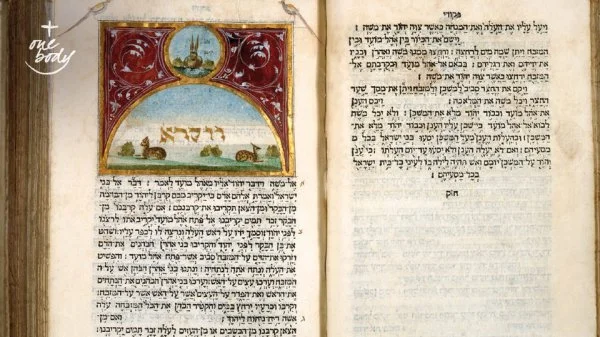
Illuminated page from a Hebrew Bible, Brescia, 1494. Photo: Wikimedia Commons.
There has never been a time when Jews and Christians were not talking with each other about the Bible. Well, perhaps “talking” is a bit misleading – for most of that time, Jews and Christians engaged in strenuous arguments with each other about the Bible and its meaning. Despite early attempts to sever Christianity from the Jewish Scriptures, such as by Marcion in the second century. Moreover, it has insisted that its way of reading those Scriptures, especially texts seeming to prophesy a messiah, was the only correct way.
Read the rest of this article in the One Body blog on Salt+Light Media
Judaism’s interpretations tended to be dismissed as inaccurate or partial, and the Jewish refusal to accept Jesus as the promised Messiah was often characterized as stubbornness. Christian authors argued that the texts were so clear in pointing to Jesus that any other interpretation had to be grounded in deliberate ignorance or ill will. Some of the Fathers of the Church spoke of the Jews as the “guardians” or “librarians” of the Sacred Books, but also as tragically flawed in their reading of them. St. Augustine wrote:
The Jew carries the book from which the Christian takes his faith. They have become our librarians, like slaves who carry books behind their masters; the slaves gain no profit by their carrying, but the masters profit by their reading (Commentaries on the Psalms 56:9).
For much of Christian history, we have tended to disparage Jewish ways of reading and interpreting the Bible. At the same time, we have taken recourse to Jewish sources to understand the meaning of the Hebrew correctly. Christianity both needed Judaism to properly understand the first portion of its Bible, but also often distanced itself from Judaism and Jewish interpreters. It was always an ambivalent relationship, like everything else in the connection between the two faiths.
The slow, gradual change that took place in Christian approaches to Judaism, especially in the wake of Vatican II’s 1965 declaration Nostra Aetate, was accompanied by a renewed conversation about the Bible between Jews and Christians. Christians began to study and discover Jewish interpretive sources with a new kind of curiosity, and interfaith conversations began to expose Christians to great Jewish interpreters of the past, such as Rashi, Maimonides, the traditions of midrash, and the ancient Aramaic interpretive translations called targums. For most Christians, this was entirely new and novel. There was a whole rich world of insights that many Christians were learning about for the first time, from those who knew and understood Hebrew and Aramaic most intimately.
In 2001, the Pontifical Biblical Commission (or PBC, the body of experts who advise the Pope on Biblical issues) published a remarkable new document called The Jewish People and Their Sacred Scriptures in the Christian Bible. The fruit of several years of study and discussion by the PBC, it explored a number of topics that drew upon, and reinforced, decades of constructive Jewish-Christian dialogue:
- The Sacred Scriptures of the Jewish people are a fundamental part of the Christian Bible;
- How fundamental themes in the Jewish Scriptures have been received in Christianity;
- Christological interpretations of the Jewish Scriptures;
- The place of the Jews in the New Testament;
- The value of Jewish Biblical interpretation for Christians;
- Pastoral orientations for the life of the Church
The document acknowledges that Christianity is necessarily grounded in the Jewish Scriptures, but that this relationship is both intimate and complex. The New Testament acknowledges and presumes the Old Testament and, in various ways, portrays Jesus as fulfilling or completing it. Any Bible edition that indicates Biblical parallels and citations makes it clear that each page of the New Testament is a tapestry of Old Testament allusions; the New Testament literally could not exist without the Old. Those “Scriptures of Israel” continue to have authority for us, as part of God’s revealed Word; they have not been abrogated or rendered obsolete.
And yet the Christian Old Testament is not completely identical to the Jewish Scriptures, in either content or design. Even we Christians do not agree among ourselves: Protestants, Catholics, and Eastern Orthodox Christians vary in terms of which books they include as inspired and canonical!
In light of a long history of Christian interpretations that have portrayed the Jewish people as fundamentally opposed to Christianity, the 2001 document also attempts to contextualize (and thus “de-fang”) portions of the New Testament which might seem to portray Jewish people in general in a negative light. It reminds us that ancient Judaism was pluralistic, made up of various different schools of thought or ways of understanding Judaism; there was never a single monolithic Judaism, and we certainly see a variety of different Jewish “parties” and stances in the New Testament.
The document addresses texts involving the group we perhaps hear the most about, the Pharisees:
The Gospels frequently present the Pharisees as hypocritical and heartless legalists … In all probability, the presentation of the Pharisees in the Gospels was influenced in part by subsequent polemics between Christians and Jews. At the time of Jesus, there were no doubt Pharisees who taught an ethic worthy of approval (#67).
That reassessment of the Pharisees continues today, including a Jewish-Christian colloquium held at the Gregorian University in Rome in 2019, where leading scholars presented a much more nuanced and thoughtful approach. Discussions among Jewish and Christian scholars have helped us to better understand that period and its religious and social dynamics.
One of the most noteworthy aspects of the PBC document was the positive way in which it spoke about the importance of Jewish interpretive methods and the value they could have for Christians. It points out that those approaches are typical of the teaching of Jesus and St. Paul, and already embedded in much of the New Testament. And, while it acknowledges that Judaism and Christianity have different starting-points, and will often disagree, it nevertheless invites Christians to delve into the riches of Jewish interpretations, as a source from which they can gain important insights:
Christians can, and ought to, admit that the Jewish reading of the Bible is a possible one, in continuity with the Jewish Sacred Scriptures from the Second Temple period, a reading analogous to the Christian reading which developed in parallel fashion. Both readings are bound up with the vision of their respective faiths, of which the readings are the result and expression. Consequently, they often cannot be reconciled. On the practical level of exegesis, Christians can, nonetheless, learn much from Jewish exegesis practised for more than two thousand years, and, in fact, they have learned much in the course of history. For their part, it is to be hoped that Jews themselves can derive profit from Christian exegetical research (#22).
Given Christianity’s longstanding approach to Jewish interpretation, this was a remarkable statement, and reflected how 40 years of Jewish-Christian dialogue had led the Church to view Judaism’s ways of reading the Bible from a new angle. The increased availability of Jewish commentaries translated into modern languages means that those resources are now available to a wider audience than ever before.
A quarter-century ago, the Pontifical Biblical Commission opened new avenues of study and understanding between Christians and Jews with this ground-breaking document. While honestly acknowledging the theological disagreements that distinguish Judaism and Christianity, the PBC also acknowledged the many ways Christianity has always drawn upon Jewish thought, and highlighted the ways in which genuine dialogue can be enriching for both sides. It stressed the foundational relationship of our two faiths—rooted in a shared body of Scripture — and it invited Christians to become more familiar with the Old Testament, both as the first two-thirds of our Bible and as the threads from which the New Testament is woven.
To give one example of the way this dialogue has benefited Christians, the revised and expanded Lectionary for Mass that emerged after Vatican II provides us with a much richer selection of Old Testament texts than was offered in earlier centuries, when only about 1 per cent was read on Sundays and feast days. Now, for most of the liturgical year, the First Reading on Sunday is drawn from the Hebrew Scriptures, and we have almost quadrupled the amount of the Old Testament we hear. As the PBC document reminds us,
The Jewish Sacred Scriptures constitute an essential part of the Christian Bible … Without the Old Testament, the New Testament would be an incomprehensible book, a plant deprived of its roots and destined to dry up and wither (#84).
The Old Testament can never be viewed as “optional.”
This is not to deny that there are real challenges for many Christian readers of the Old Testament. There are portions which strike us because of their violent language and imagery. We need to grapple with those passages prayerfully, sensitively, and with guidance from knowledgeable scholars. Even modern geopolitics can intrude into our reading of the Old Testament: we need to carefully distinguish the repeated references to “Israel,” the ancient ancestors of today’s Jewish people, from “Israel,”the modern Middle Eastern state established in 1948 and possibly today’s Jewish people as a whole. The names are identical, of course, and people’s opinions about modern Israel and the actions of its government can sometimes make them very uncomfortable when they read passages that speak about ancient Israel. Some have suggested omitting those passages in public reading, or substituting other terms for “Israel,” to avoid confusion. Either way, grasping the historical and social context of Biblical passages – the authors would have only known the ancient, covenant people – is vital to prevent misunderstandings.
As Holy Week approaches, that Jewish context is absolutely essential if we want to steer clear of the kinds of anti-Jewish attitudes and preaching that have often marred our history. Canada’s Catholic bishops have given clear guidelines to this effect, which I will quote at length:
As we read or meditate on the Passion accounts during Holy Week, we must be careful that we do not unwittingly or unwillingly carry away or transmit anti-Jewish or anti-Semitic impressions…. Before reading these accounts (especially according to John) it would be well for us to recall that when the evangelist refers to “the Jews,” we know he is not saying that all Jews, either of Jesus’ time or our time, are responsible for his death. Pilate, along with some members of the Sanhedrin, cannot avoid their responsibility, but as Christians we must remember: “Christ, out of infinite love, freely underwent suffering and death because of the sins of all people, so that all might attain salvation. It is the duty of the Church, therefore, in its preaching to proclaim the cross of Christ as the sign of God’s universal love and the source of all grace” (Vatican Council II, Declaration on the Relations of the Church to Non-Christian Religions #4). All who are called to preach the Word of God or to transmit it by the spoken or written word are asked to guard against the possibility of transmitting prejudice or false interpretations of Scripture as we celebrate these important Feasts. (Ordo: Pastoral Notes for the Liturgical Calendar, 2023, p. 79.)
During Holy Week especially, we want to be attentive to our minds and hearts, and reject old clichés and stereotypes that view Jewish people in negative and hurtful ways. At a time when antisemitic violence and rhetoric are at shockingly high levels, we want to stand in solidarity with our Jewish sisters and brothers, remembering the now-famous words of Pope St. John Paul II 40 years ago, at the Great Synagogue of Rome: “With Judaism, we have a relationship which we do not have with any other religion. You are our dearly beloved brothers, and, in a certain way, it could be said that you are our elder brothers.” Or, as he said on another occasion: “Whoever meets Jesus Christ meets Judaism.” In the Old Testament, we find an important bridge between our two communities.
For many of us, the Old Testament still remains relatively unexplored—it can feel quite daunting to venture into. However, our Jewish sisters and brothers have been reading, praying with, and meditating on those texts for more than 2000 years. Their learning and reflections can be precious guides to us in discovering the books that nourished Jesus and the early Church. Even when Jews and Christians arrive at different conclusions (which we often will!), today we are engaged in a genuine conversation, rather than an argument, and our ears and hearts are open to what our conversation partners have to offer us. As we mark the twenty-fifth anniversary of The Jewish People and Their Sacred Scriptures in the Christian Bible this year, we can rejoice in how far our dialogue has led us in our relationship with the Jewish people, “to whom the Lord our God spoke first,” as we pray in our Good Friday Solemn Intercessions. We can also pray that the energy and momentum of that relationship will continue to guide us forward, in ways that can inspire our world and model what is possible.
Dr. Murray Watson is a Catholic Biblical scholar who works as part of a Catholic school board north of Toronto, and has been involved in Jewish-Christian relations for more than 25 years.
 Posted: Mar. 31, 2026 •
  Permanent link: ecumenism.net/?p=14941
Categories: One Body, Opinion • In this article: antisemitism, Bible, Hebrew Bible, Judaism, New Testament, Scripture
Transmis : 31 mars 2026 • Lien permanente : ecumenism.net/?p=14941
Catégorie : One Body, Opinion • Dans cet article : antisemitism, Bible, Hebrew Bible, Judaism, New Testament, Scripture
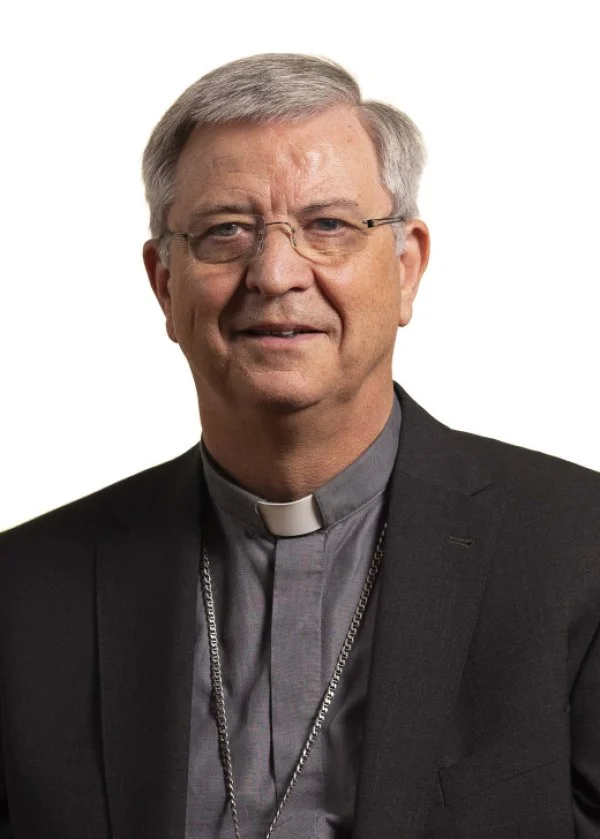
Belgian bishop plans to ordain married men to fulfil Synod vision
— Mar. 21, 202621 mars 2026
Bishop Johan Bonny of Antwerp has challenged Rome to push forward with synodal reforms by announcing changes including the ordination of married men in his diocese by 2028.
Carefully quoting guidelines for the Synod on Synodality’s implementation phase (2025-2028), his 11-page pastoral letter proposed the viri probati reform alongside the naming of woman pastors, a new understanding of parishes, welcoming new Catholics and updating the Church’s message.
… Read more » … lire la suite »
North America-Turtle Island Regional Ecumenical Theological Institute (NATI-RETI) 2026: “Where Now for Visible Justice?”
— Mar. 6, 20266 mars 2026
The Canadian Council of Churches (CCC) and the National Council of Churches of Christ in the USA (NCC), initiated and supported by the World Council of Churches (WCC), are proud to announce a joint theological project: the North America-Turtle Island Regional Ecumenical Theological Institute (NATI-RETI) 2026. Scheduled for August 3 through August 16, 2026, this initiative represents a significant renewed chapter in cross-border collaboration, providing a shared platform for emerging Christian leaders from Canada and the United States to engage in deep theological reflection and spiritual fellowship.
… Read more » … lire la suite »

Vatican theological commission warns of replacing God with ‘a world governed by machines’
— Mar. 5, 20265 mars 2026
The Vatican’s International Theological Commission has warned that if humanity places total trust in technology in a “world ruled by machines,” it risks replacing the “living God” with a counterfeit “virtual God.”
The assessment came in a sweeping new document, published on March 4, examining how artificial intelligence, transhumanism and other technological developments can pose profound risks to human identity and dignity. The document seeks to propose a response rooted in Christian anthropology and the Gospel.
The 48-page document, titled “Quo vadis, humanitas? Thinking about Christian anthropology in light of some scenarios for the future of humanity,” was published in Italian and Spanish after being approved by Pope Leo XIV. Its Latin title — meaning “Where are you going, humanity?” — echoes the question tradition holds was put to St. Peter before his crucifixion in Rome.
… Read more » … lire la suite »
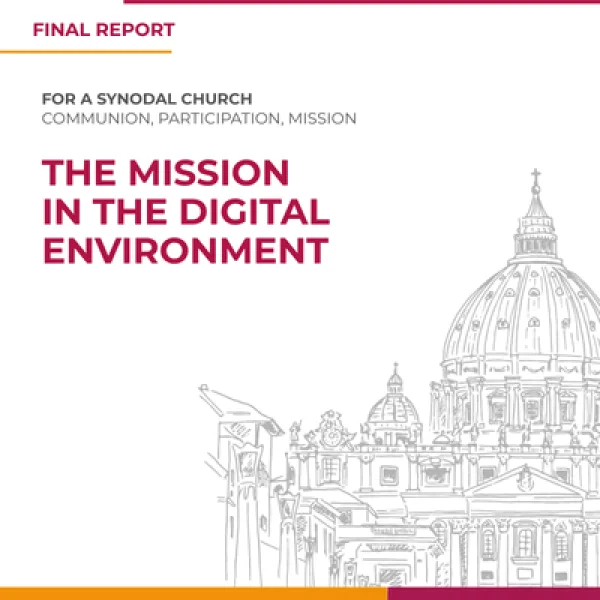
The Mission in the Digital Environment
— Mar. 3, 20263 mars 2026
God calls every baptized person to proclaim the Good News, entrusting this missionary mandate to all. Within our missionary Church, charisms have historically developed to live out this mission in response to the needs of different times and cultures. In the present historical moment, the Final Document of the XVI Ordinary General Assembly of the Synod of Bishops (FD), now part of the Ordinary Magisterium of the Pope, has recognized the digital environment as a culture, with its own dynamics, languages, and modes of interaction. In this perspective, the Synod affirms that “digital culture constitutes a crucial dimension of the Church’s witness in contemporary culture and an emerging missionary field” (FD, no. 149).
We all, as the baptized, are called to bring the Good News to people we meet in this environment through missionary approaches that respond to its specific characteristics, engaging its opportunities while facing its challenges and risks directly.
… Read more » … lire la suite »
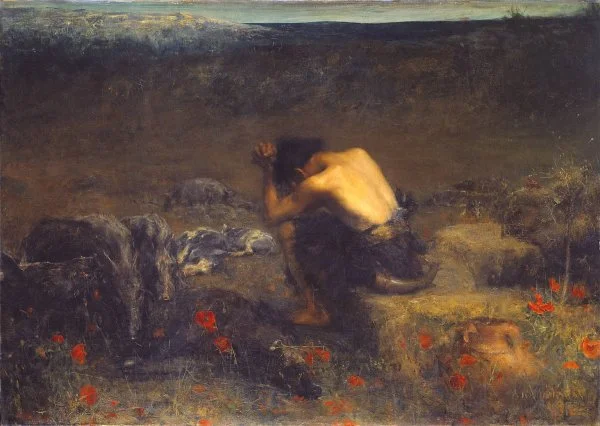
Theology of Church Apologies
— Mar. 2, 20262 mars 2026
What does it mean when a church says “I’m sorry”? “Theology of Church Apologies” from the Anglican-Roman Catholic Dialogue of Canada invites reflection on the significance of church apologies. Drawing on scripture, theology and historical examples, it shows how apologies can help repair relationships and guide communities towards truth, healing and reconciliation.
“I’m sorry.”
Many of us know the profound healing effect of hearing these or similar words spoken, in sincerity and truth, by someone who has in some way wronged us. Many of us also know the deeply humbling feeling of being the one who offers a genuine apology.
In recent years several churches have offered formal apologies to individuals and communities of people who have been harmed – sometimes traumatically – by our words and deeds. In Canada, for example, Catholic and Anglican leaders have formally apologized for our churches’ role in the destructive system of Indian Residential Schools.
… Read more » … lire la suite »

Now Hiring! General Secretary of the Canadian Council of Churches
— Mar. 2, 20262 mars 2026
Has your faith commitment and organizing experience prepared you or someone you know for this leadership role?
The Canadian Council of Churches is seeking an individual to fill the role of General Secretary on a full-time basis for a 5-year renewable term, beginning September 1, 2026.
The Canadian Council of Churches (the Council) is a broad and inclusive ecumenical body, now representing 26 member churches including Anglican; Eastern and Roman Catholic; Evangelical; Free Church; Eastern and Oriental Orthodox; and Historic Protestant traditions.
… Read more » … lire la suite »

Baptism, Footwashing, and Mission | One Body
— Feb. 26, 202626 févr. 2026
What if footwashing were a sacrament? Of all of the things that Jesus instructed the disciples to do, why didn’t footwashing become a sacrament like the others? Thoughts like these are one of the hazards of being a theologian.
I was thinking about this strange idea this week while reflecting on Pope Leo XIV’s new series of catecheses on Vatican II. Just when he is encouraging us to re-read the documents of the Council, the CCCB has issued a new National Strategy on Ecumenism. The first step in this strategy is to focus on education and formation about the church’s ecumenical teaching, beginning with the Council.
… Read more » … lire la suite »

Ukraine, Canada, and the Church: Calls to action and prayer
— Feb. 24, 202624 févr. 2026
As we approach the fourth anniversary of Russia’s full-scale invasion of Ukraine and the twelfth anniversary of its illegal occupation of Crimea and parts of eastern Ukraine, we once again address Canadian Christians with urgency, grief, and hope. These calls to action build on the witness offered in February 2024 when we released A Canadian Pastoral Letter on Ukraine, Canada and the Church. It arises from relationships of shared prayer, co-suffering, and discernment among Ukrainian Orthodox, Ukrainian Catholic, Evangelical, and other Christian leaders, together with the World Evangelical Alliance Peace & Reconciliation Network, The Evangelical Fellowship of Canada, and The Canadian Council of Churches. We write again because the war continues, suffering deepens, and faithful Christian witness remains urgently needed.
… Read more » … lire la suite »
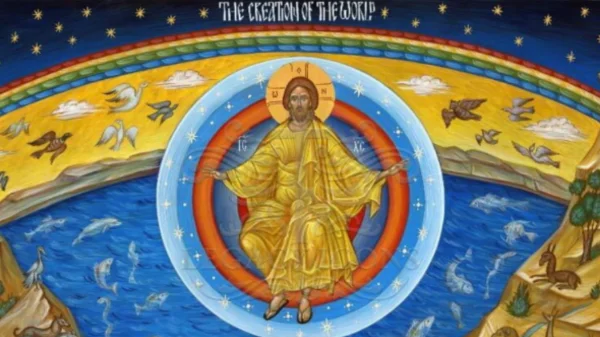
Churches Worldwide to Celebrate Feast of Creation
— Feb. 20, 202620 févr. 2026
A growing ecumenical movement is reshaping church calendars worldwide. The Feast of Creation — celebrated annually on Sept. 1 and also known as Creation Day or the World Day of Prayer for Creation — is being formally added to the liturgical calendars of many churches.
The World Communion of Reformed Churches is supporting the initiative alongside the World Council of Churches, Middle East Council of Churches, Anglican Communion, Lutheran World Federation, and the World Methodist Council.
… Read more » … lire la suite »
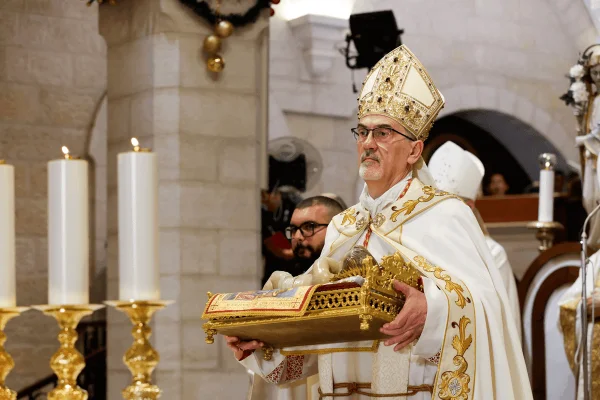
Board of Peace a ‘colonialist operation’: Cardinal
— Feb. 18, 202618 févr. 2026
Cardinal Pierbattista Pizzaballa, Latin patriarch of Jerusalem, strongly criticised the U.S.-led Board of Peace, an international body chaired by President Donald Trump to oversee the governance and reconstruction of Gaza. During an event at the Roman parish of San Francesco a Ripa Grande, Pizzaballa was asked by moderator Maria Gianniti, Rome correspondent for the Italian news channel RAI, about his thoughts on the Board of Peace.
“What do I think of the Board of Peace? I think it is a colonialist operation: others deciding for the Palestinians,” Pizzaballa said, according to a report by Italian newspaper Il Sole 24 Ore. The cardinal also commented on the invitation extended to the Vatican to join the international body and its $1-billion price tag for a permanent seat on the board.
… Read more » … lire la suite »